
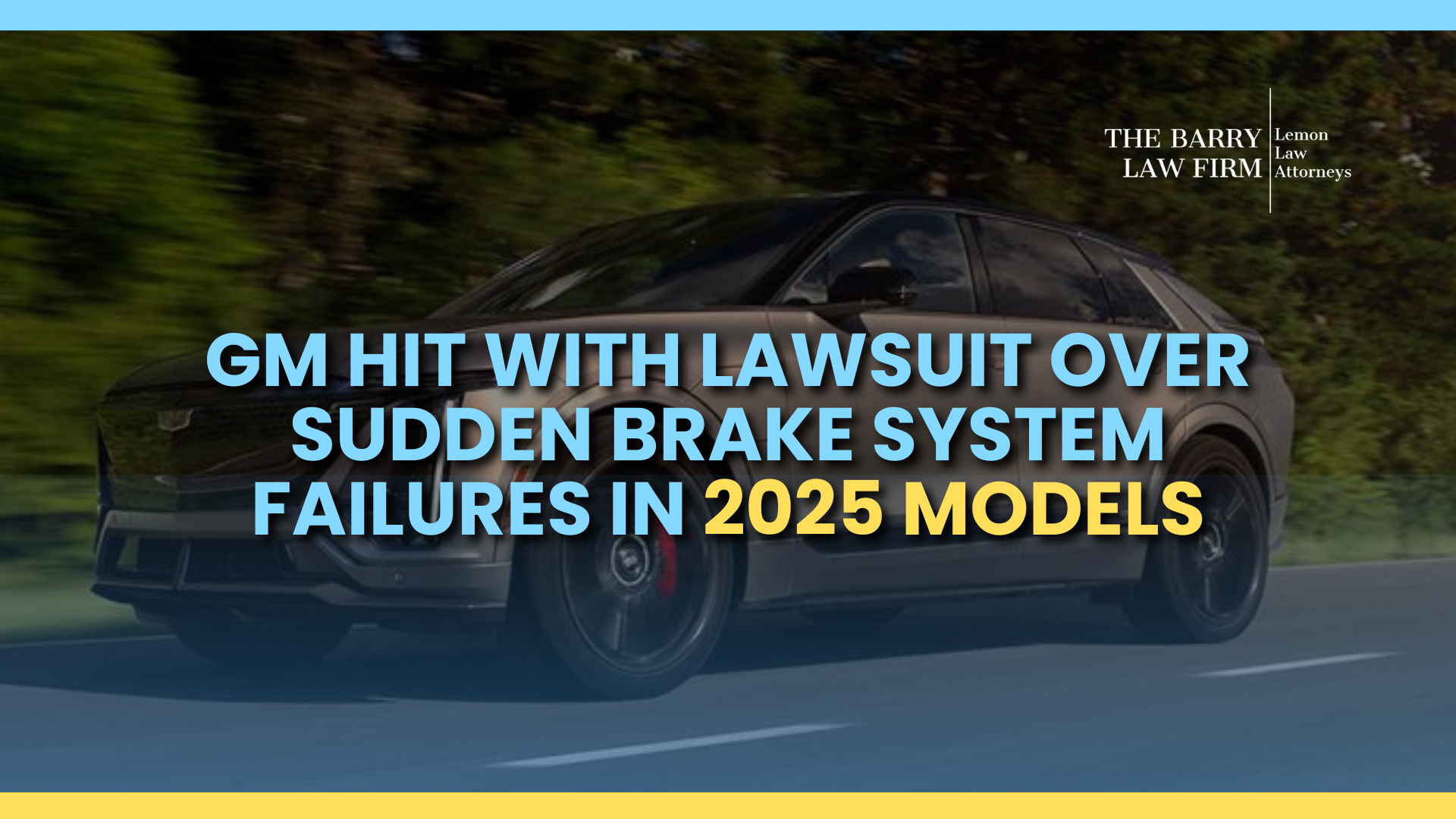
GM Hit With Lawsuit Over Sudden Brake System Failures in 2025 Models
General Motors is facing mounting legal pressure after multiple reports of sudden braking system failures involving several of its newest 2025 models. A class action lawsuit filed in the Eastern District of Pennsylvania alleges that critical brake components—including the brake master cylinder—can fail without warning, leaving drivers unable to safely bring their vehicles to a stop. For consumers who purchased these vehicles expecting the latest advancements in safety, the lawsuit raises serious questions about whether GM released potentially dangerous vehicles onto the road without proper testing or disclosure.
The lawsuit currently includes drivers in New York and Pennsylvania and covers the 2025 Chevrolet Traverse, 2025 GMC Acadia, 2025 Buick Enclave, 2025 Chevrolet Colorado, and 2025 GMC Canyon. These vehicles are among the automaker’s most popular midsize SUV and pickup offerings, many purchased as family vehicles or daily commuters. Owners purchased these models on the belief that GM’s newest platform upgrades would enhance safety and reliability. Instead, drivers have reported abrupt brake loss accompanied by warning lights and dashboard alerts, including ABS system warnings and “Service Brake System” messages that appear only at the moment of failure—often too late to prevent danger.
While the lawsuit originated on the East Coast, the mechanical and engineering issues identified in the filing are not geographically limited. If the defect stems from a shared component, supplier issue, or platform-wide design flaw, owners nationwide—including in California—could be unknowingly driving vehicles that pose significant road hazards. As investigations continue, this case may widen into a broader legal battle involving more plaintiffs, more states, and potentially millions in liability.
Sudden Brake Failure Under Normal Driving Conditions 
The lawsuit alleges that brake failure in these GM vehicles is not the result of worn parts, neglected maintenance, or misuse. Instead, the failures appear to occur spontaneously under ordinary driving conditions, without gradual warning signs or long-term deterioration. Drivers have reported instances where brake pedals suddenly lose pressure and sink to the floor, failing to engage the hydraulic system. Others describe the opposite problem: brake pedals becoming stiff and unresponsive, making it physically difficult or impossible to reduce speed. Both scenarios place drivers in immediate danger, especially while traveling at highway speeds or navigating heavy traffic.
Even more concerning are reports that electronic safety features fail simultaneously when mechanical braking power is lost. Many modern safety systems rely on brake system functionality to activate emergency braking, traction control, collision prevention systems, and ABS modulation. When the master cylinder fails, these interconnected systems may cease functioning as designed, leaving drivers with no mechanical stopping power and no electronic backups.
Owners who experienced these failures sought replacement parts through warranty repairs, but plaintiffs argue that replacing individual components does not address a deeper systemic issue. The complaint suggests that the failure may stem from fundamental design flaws, insufficient quality control, or defective component sourcing affecting entire production batches. If true, this means that thousands of vehicles remain on the road with the potential to fail in the same manner, regardless of whether early fixes have been attempted.
Class Action Filed in Federal District Court
The case, Eric Barron, et al., v. General Motors LLC, was filed in federal court and seeks at least $5 million in financial damages. The lead plaintiffs, both driving 2025 Chevrolet Traverse models, experienced brake system failures that required replacement parts, but argue that repairs were not performed within a reasonable timeframe and did not sufficiently restore the vehicles’ safety or original value. The plaintiffs further claim that GM knowingly sold vehicles that were unsafe at the time of purchase, violating warranty obligations and consumer protection laws.
In their complaint, plaintiffs assert that the affected vehicles are now “unmerchantable and worth less money at the time of sale or lease.” The argument is that once a vehicle has demonstrated the potential for sudden, catastrophic brake failure, its resale value and consumer confidence become permanently damaged—regardless of any temporary repair. While GM has provided replacements under warranty, the lawsuit claims that such repairs are inadequate without full disclosure of root causes, long-term fixes, or broad recall notifications.
Class certification could expand the lawsuit to include additional GM owners nationwide and could trigger related filings in other jurisdictions. Historically, federal cases involving safety-critical systems like brakes often lead to increased regulatory scrutiny, voluntary recalls, or federally mandated corrective actions. While GM has not acknowledged wrongdoing, the outcome of this case could determine whether the company faces further legal or regulatory consequences.
Engineering Links Across Multiple GM Platforms 
A key issue raised in the lawsuit is the relationship between platforms, shared engineering components, and parts sourcing across GM’s 2025 midsize lineup. The Chevrolet Traverse, GMC Acadia, and Buick Enclave all share GM’s C1 platform and reportedly use the same brake master cylinder design. Because these vehicles share core braking architecture, a defective component could propagate across three different nameplates, affecting a large volume of vehicles sold throughout the United States.
Although the 2025 Chevrolet Colorado and GMC Canyon are built on different platforms and use a different master cylinder, the lawsuit notes that both models have exhibited similar failure patterns. This suggests that the problem may not be limited to a single component, but could instead stem from a shared supplier, design specifications, or manufacturing methodology. If the defect arises from systemic design practices rather than isolated parts, additional GM models not currently named in the lawsuit could be implicated in future investigations or litigation.
Platform-sharing among automakers allows cost efficiencies, but it also means that a defect in a single engineering pathway can proliferate across multiple vehicle lines. As more owners report issues, regulators and consumer advocates may push for broader testing, expanded recalls, or deeper review into GM’s production standards for braking systems.
No Recall Announced Despite Serious Safety Concerns
Despite repeated reports of brake failures and the filing of a federal class action lawsuit, GM has not yet issued a recall for the affected vehicles. Warranty repairs have been offered on a case-by-case basis, but without a formal recall, there is no proactive plan in place to identify or repair vehicles before they become dangerous. This leaves consumers at risk, especially because the alleged failure occurs abruptly and without sufficient warning to allow safe response.
For drivers in states like California, where highways are heavily congested and traffic patterns change rapidly, brake failure can easily result in catastrophic multi-vehicle collisions. A lack of recall communication means many owners remain unaware that their vehicle could suddenly lose braking power at any time. In legal terms, failure to issue a recall may expose GM to claims of negligence, concealment, and breach of implied warranty. If evidence shows the automaker delayed acknowledging the defect despite internal knowledge, legal consequences could escalate significantly.
Brake system failures are among the most serious defects a vehicle can experience, alongside steering system malfunctions and airbag failures. Historically, defects of this nature have led to massive national recalls once investigations matured. If subsequent reports confirm widespread issues across GM platforms, regulatory action may follow, but affected consumers should not wait for a recall before seeking legal protection.
How The Barry Law Firm Can Help
At The Barry Law Firm, we specialize in helping California consumers take legal action against manufacturers when their vehicles fail to meet quality and safety standards. If your GM vehicle has been in the shop repeatedly for mechanical or safety issues — or if a recall repair hasn’t fixed the problem — you may be entitled to a refund, replacement, or cash compensation under California’s Lemon Law.
Lemon Law Expertise – We specialize in California Lemon Law cases and know how to hold manufacturers accountable.
No Upfront Costs – The California Lemon Law requires the manufacturer to pay our fees. That means, at The Barry Law Firm, we will never charge you, no matter the outcome of your case.
Proven Success – We have helped thousands of consumers obtain favorable settlements for their defective vehicles.
Personalized Attention – We handle all legal paperwork and negotiations so you don’t have to deal with the stress.
If GM’s repairs have failed to solve your vehicle’s problems, you may have a GM brake defect Lemon Law case. Contact us today to explore your legal options.
Closing
The lawsuit against General Motors marks another significant instance of potential safety failures in modern vehicles, especially those marketed as sophisticated, upgraded, or ideal for families. When the very systems designed to protect occupants fail without warning, drivers are left vulnerable and exposed to dangers they neither caused nor anticipated. For those who purchased GM’s latest lineup believing they were buying dependable vehicles equipped with the latest safety technology, these allegations represent a severe breach of trust.
California consumers have strong legal protections when automakers fail to deliver vehicles that meet basic safety and reliability standards. If GM cannot provide a permanent and verifiable fix for its brake system failures—or if additional reports surface demonstrating that replacements do not resolve the underlying problem—affected drivers may be entitled to compensation. The legal system exists not simply to assign blame, but to protect consumers, enforce accountability, and prevent manufacturers from placing defective vehicles on the road.
If your GM vehicle has shown signs of brake malfunction, repeated warning lights, pedal resistance issues, or unexplained braking failures, now is the time to document every detail and understand your legal rights. The Barry Law Firm is committed to helping California drivers hold automakers accountable and ensuring that safety comes before corporate cost-saving measures. Do not wait for recalls, expanded lawsuits, or official investigations—your safety is worth more than unanswered promises.
 Email
Email
 Facebook
 Twitter
 Pinterest