
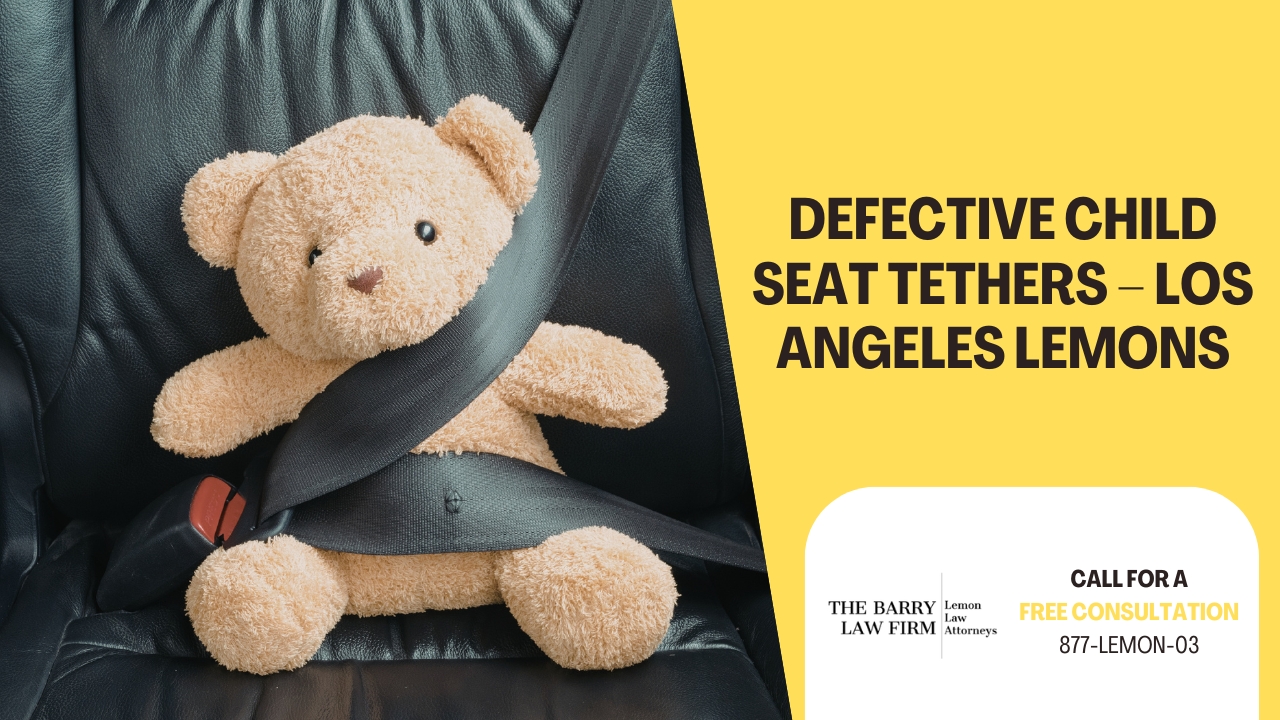
Child seat tethers keep kids stable during sudden stops or collisions, so any failure puts families at real risk. Some vehicles have faulty anchors, weak welds, or design flaws that affect how the seat holds during everyday travel. When these issues appear in models already linked to defective child seat parts, parents often feel unsure about the safety of their vehicle.
If your car shows recurring, warranty-covered tether problems, California’s Lemon Law may offer protection. The Barry Law Firm can review your situation, explain your rights, and help you understand whether you qualify for relief. Contact us today for guidance.
The Risks of Defective Child Seat Tethers
Defective child seat tethers pose serious safety risks because a broken anchor can cause the car seat to move or tip. Even small shifts during a sudden stop or crash can raise the risk of injury. These problems often happen because the welds are weak, the anchor points are loose, or the design is not strong enough. In some cars, the anchor may pull away from the seatback, while in others, it cannot stay tight once the strap is tightened.
Parents often notice early warning signs before the defect becomes serious. Common red flags include:
- Loose or wiggling anchor points
- Rattling near the tether connection
- Difficulty tightening or locking the strap
- Tether straps slipping after being tightened
- Visible gaps or movement in the seatback where the anchor is welded
Families do not need to wait for an accident or major event. A recurring tether issue may give parents the right to pursue relief under the state’s Lemon Law. California views tether defects as serious because they directly affect child safety. If the defect appears under warranty and the manufacturer cannot repair it after several attempts, the vehicle may qualify as a lemon.
Vehicles with Defective Tether Issues
Several cars from different brands and years have problems with their tether anchors. Families notice loose parts, straps that won’t tighten, or anchors that move too much. These issues worry parents about their child’s safety and whether the car will protect them in a crash. Two recent recalls regarding faulty child seat tethers affect the Jeep Grand Cherokee, Chevy Equinox, and GMC Terrain.
Jeep Grand Cherokee
Jeep recalled 243 Grand Cherokee L SUVs from the 2024 model year after finding that the LATCH child car seat anchors may not be welded securely to the seat frames. Weak welds can cause the anchor to fail under pressure, which puts children at risk during sudden stops or crashes.
Chevy Equinox and GMC Terrain
Many parents have reported problems with child seat anchors in certain Chevy Equinox and GMC Terrain models, especially those from 2020 to 2023. These vehicles were recalled because the four rear lower LATCH anchorage bars may have an overly thick powder coating. This coating can prevent a child seat from latching correctly, making proper installation difficult or unsafe. When the seat cannot attach properly, it may shift during everyday driving or sudden stops. This instability increases the risk of injury in a crash, raising major safety concerns for families.
Not every model in these ranges has defects, but many do. Depending on the circumstances, a documented issue may give you enough reason to request warranty repairs or consider a Lemon Law claim.
What Is Being Done to Fix This?
Manufacturers responded in different ways after confirming tether-anchor defects:
- Jeep is fixing the recall by reinforcing the original anchor structure on the seatback frame to meet and exceed federal strength requirements, rather than replacing the anchors. This repair strengthens the anchor connection and helps keep child seats stable. The process usually takes only a few hours, and parents never pay for any parts, labor, or inspection tied to the recall.
- GM is addressing the GMC Terrain and Chevy Equinox issues by having authorized dealers inspect the rear LATCH anchorage bars and remove or replace the thick powder coating when needed, all at no cost to vehicle owners. Until the fix is complete, families should install child seats using the rear seat belts instead of the LATCH bars.
You can check your vehicle’s VIN on the NHTSA website to confirm whether your vehicle is included in these recalls. Manufacturers must provide a safe vehicle. If the anchor problem remains unresolved, you may have grounds for further action.
What Should I Do If My Vehicle Was Part of the Recall?
If your vehicle appears in an official recall notice, schedule a repair with your authorized dealer as soon as possible. Authorized dealers must complete recall repairs at no cost, including parts, labor, and inspections. You should never be charged for anything related to the recall work.
Keep detailed records throughout the process. Save every repair order and write down the date, the issue you reported, and anything the technician noted. If the defect continues after the repair, these documents will help support a Lemon Law claim. Helpful records include:
- Repair orders and service notes
- Photos or videos of the defect
- Written descriptions of recurring issues
If you struggle to book an appointment, ask the dealer for written confirmation of your attempt to book. Many families wait weeks for recall repairs, and these delays matter when evaluating whether the manufacturer had a fair chance to fix the problem.
If you still feel unsure about your options, The Barry Law Firm will answer questions about recall repairs, service delays, and your Lemon Law rights.
Is My Vehicle a Lemon?
California’s Lemon Law protects consumers who buy or lease defective vehicles in the state. If the manufacturer cannot repair a severe, warranty-covered defect after a reasonable number of attempts, the vehicle may qualify as a lemon.
However, the defect must substantially impact the vehicle’s safety, use, or value. A child-seat tether defect should qualify as a serious safety concern. Because the tether helps stabilize a child seat during sudden stops or collisions, any failure can place children at risk.
The law looks at several key factors when determining whether a vehicle meets the standard, including:
- How many times the car has been brought in for the same tether defect
- Whether the defect creates a safety risk
- How long the vehicle stayed out of service for repairs
- Whether the defect appeared during the manufacturer’s original warranty period
If your vehicle still has tether issues after multiple repairs, depending on your warranty and repair history, you may be able to demand that the manufacturer buy your vehicle back and refund the purchase or lease price and related losses, such as rental or towing costs.
Filing a Lemon Law Claim for Defective Child Seat Tethers
A strong Lemon Law claim relies on clear, organized documentation. Even in child-safety cases, manufacturers sometimes deny the problem or claim the tether works fine.
When you file a Lemon Law claim, you must demonstrate that the authorized dealer had a fair opportunity to fix the defect. You also must show that the defect affects the vehicle’s safety, performance, or value. A weak or unstable child-seat tether almost always meets this standard because it compromises the seat’s stability during sudden stops or crashes.
Begin by collecting records from every service visit, including repair orders, recall notices, photos, and videos of the tether problem. You should also keep notes describing how the tether behaved before and after each repair attempt. These materials help show the number of repair attempts, that the defect continues, and that the issue affects child safety.
A lawyer will review your records and explain your options. The lawyer can then contact the manufacturer, manage communication with them, and prepare the claim on your behalf. If the manufacturer refuses to resolve the problem, your lawyer can help you pursue further action.
If your claim succeeds, the manufacturer may repurchase your car and reimburse your losses. Your lawyer will guide you through each step so you know what to expect. And at The Barry Law Firm, we’ll handle your claim without charging you a penny. California’s Lemon Law requires manufacturers to pay your legal fees in a successful claim, and we never charge for our services – regardless of the case’s outcome.
Call a Lemon Law Attorney for Answers Tailored to You
Defective seat tethers pose real safety risks, especially for families who rely on stable anchor points to keep their children protected. If your vehicle shows ongoing tether issues despite the manufacturer making several repair attempts while under warranty, you may have rights under California’s Lemon Law.
The Barry Law Firm will review your records, explain your legal options, and guide you through each step of the process. Contact us today to get clear answers and help with your potential Lemon Law claim in a FAST & FREE consultation.