
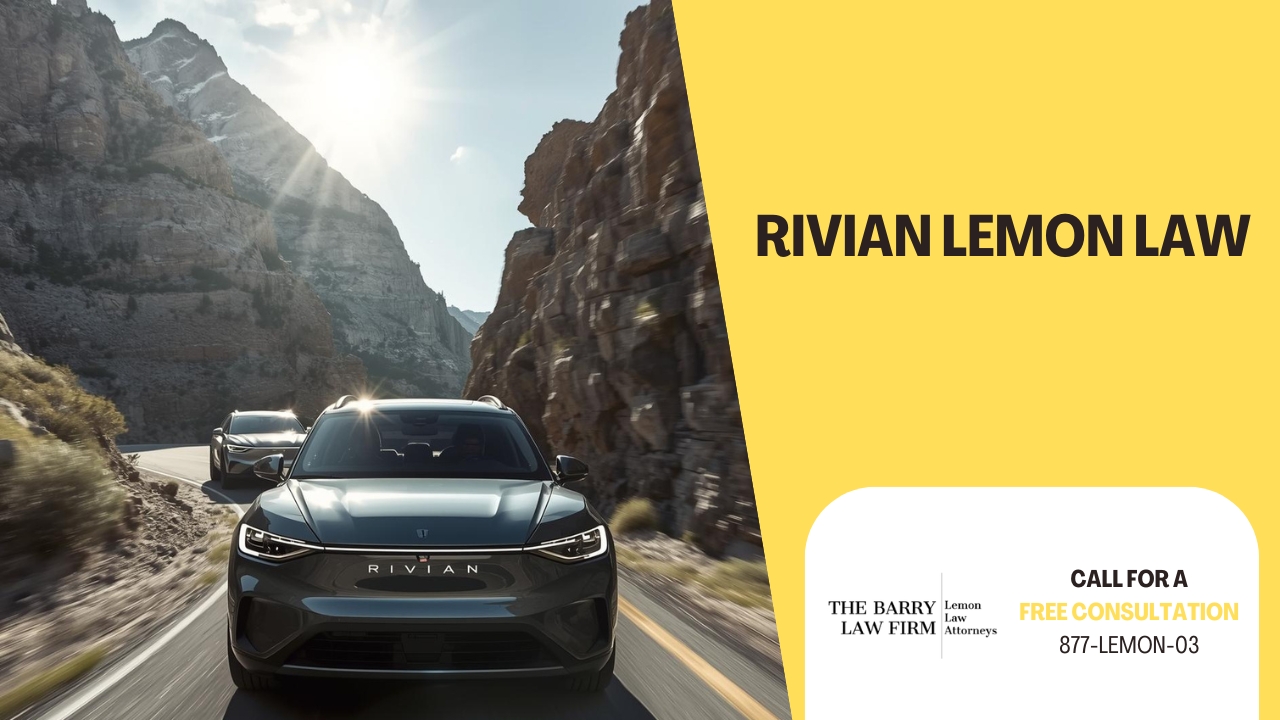
Rivian is a relatively new manufacturer of electric vehicles in California. But like many automakers, some of its cars and trucks have persistent defects. While California law lets you seek legal relief for ongoing problems with your vehicle, a Rivian Lemon Law claim is difficult to win without proper legal support.
The Barry Law Firm has focused exclusively on California Lemon Law claims since 2010, giving us over 15 years of in-depth experience with these complex cases. Our team knows what it takes to win these claims and how to help you get rid of your lemon and demand fair compensation. We’ve won significant compensation for our clients, and we never charge them anything, regardless of the outcome of the case. Call now or complete our contact form for a FAST & FREE consultation.
What Is California’s Lemon Law for Rivians?
California’s Lemon Law provides strong legal protection when your Rivian electric vehicle has ongoing problems. The law applies when a defect significantly affects a car’s safety, use, or value while the manufacturer’s original warranty is still in effect.
Before you can seek relief through a Lemon Law claim, you must allow the manufacturer a reasonable number of chances to repair the problem through an authorized dealership or repair facility. What counts as “reasonable” depends on the specific issue and its severity.
When those repair efforts fail, California law can require the manufacturer to repurchase your defective vehicle through a Lemon Law buyback. That buyback can include what you paid for the vehicle initially, any loan payments you’ve made, the cost of repairs, towing, and rental cars, and more. The law also shifts the cost of legal fees to the manufacturer after a successful claim. This framework gives you a clear legal path to address ongoing Rivian defects without financial risk.
When May a Rivian Vehicle Qualify as a Lemon?
California’s Lemon Law focuses on how a recurring defect affects a vehicle and how the manufacturer responds after you report the issue. These claims consider the full history of repairs, how much time the vehicle has been in the shop, and the applicable warranty coverage.
A Rivian may qualify as a lemon when all of the following apply:
- The vehicle has a substantial defect that affects its safety, usability, or value.
- The defect falls under the manufacturer’s original warranty.
- The problem starts while the warranty remains in effect.
- You gave the manufacturer a reasonable number of chances to fix the issue, or the vehicle is out of service for an excessive amount of time due to warranty repairs.
- The manufacturer, usually through an authorized repair facility, performed the repair attempts.
For example, suppose you purchase a new Rivian and soon notice repeated electrical failures that limit driving range and trigger warning alerts. You bring the vehicle in for warranty repairs several times, but the problem continues. The car spends weeks at the authorized repair facility while technicians attempt software updates and component replacements. However, the same defect returns and disrupts the car’s normal use even after multiple visits. In this scenario, California’s Lemon Law may require the manufacturer to buy back the faulty vehicle and refund what you have spent on it.
Common Rivian Defects That May Be Covered Under California’s Lemon Law
Rivian’s recall notice page on its website lists more than a dozen recalls in the last few years. Some problems included in these recalls include:
- Advanced Driver Assistance System (ADAS) software limits – Certain Rivian R1S and R1T vehicles used earlier ADAS software that could misclassify driving conditions at low speeds. When Highway Assist does not respond as expected and the driver loses full control, the risk of a crash increases.
- High-voltage distribution box grounding defects – Some Rivian cars left the factory with an improperly grounded connection inside the high-voltage distribution box. This condition can cause a sudden loss of power without warning. Losing power while driving can make it difficult for drivers to steer or respond to traffic, especially at higher speeds.
- Improperly installed seat belt anchors – Reports show that some Rivian vehicles have front seat belt anchors improperly installed during manufacturing. A loose or insecure anchor may fail to restrain an occupant during a collision, increasing the risk of severe injury.
- Damaged pillar trim affecting air curtain deployment – Certain R1S and R1T models reused upper pillar trim panels during repairs instead of replacing the panels. Damaged attachment clips can interfere with the deployment of the side air bag curtain during a rollover or side-impact crash.
- Accelerator pedal sensor issues in high temperatures – Some early Rivian accelerator pedal designs may fail to detect when the driver releases the pedal in hot cabin conditions. This problem can prevent the vehicle from entering auto-hold or park and may cause unintended forward movement if the driver does not react quickly.
- Occupant crash protection compliance failures – Several Rivian recalls involve failures to meet federal crash protection standards. These issues can affect how airbags deploy or how the vehicle protects occupants during a collision, making severe injuries more likely for drivers and passengers in these defective cars.
- Steering and suspension fastener torque problems – Certain Rivian EVs may have steering knuckle fasteners that did not receive proper torque. This condition can affect wheel alignment or, in rare cases, lead to separation that limits driver control.
- Front passenger air bag deactivation failures – One especially noteworthy Rivian defect is that some vehicles may not deactivate the front passenger air bag when a child is in the seat. Without a properly working sensor, children in the passenger seat are much more likely to sustain injuries if the airbag deploys.
While a recall doesn’t automatically make your Rivian a lemon, these frequent issues with their vehicles show that they are prone to severe defects. Any warranty-covered defect severely impacting the vehicle’s use, value, or safety could qualify your Rivian for state Lemon Law protection.
Rivian Models That Could Be Lemons
Rivian currently sells two models of passenger cars: The R1S electric SUV and the R1T electric pickup truck. The company also sells electric vans for commercial delivery and logistics operations. There is some variation within these models, but the company’s line is currently relatively limited compared to larger manufacturers.
Unfortunately, Rivian’s comparative lack of models has not limited the presence of defects across its product line. The company’s recall page lists recalls related to the R1S and R1T beginning in 2022 (when the company first started selling vehicles to the public). There are also several recalls related to problems with the company’s EDV electric vans. In short: Any Rivian on the road could be a lemon.
How Does the California Lemon Law Protect You for a Defective Rivian?
When your defective Rivian qualifies as a lemon, state law can require the manufacturer to repurchase it through a Lemon Law buyback. A successful Lemon Law claim shifts responsibility back to the manufacturer and gives you financial relief tied to the defective vehicle. A Rivian Lemon Law claim may cover:
- The amount you paid toward the purchase or lease of the vehicle, including your down payment, any payments you made, and your remaining loan or lease balance
- Sales tax, registration fees, and other official charges
- Out-of-pocket costs related to repairs, towing, and alternative transportation
- Attorney fees and costs, which the manufacturer must pay after a successful claim
What to Do If You Think Your Rivian Is a Lemon
Follow these steps if you are having ongoing repair issues with your Rivian EV:
- Document every issue as it happens. Write down when the problem starts, how often it occurs, and how it affects the car’s driving, safety, or normal use. Clear notes help show that the defect has persisted despite multiple repair attempts.
- Schedule warranty repairs with an approved Rivian repair facility. Always bring your vehicle to a Rivian-authorized service location for warranty work. Repair attempts only count under California’s Lemon Law when the manufacturer handles them through an approved facility.
- Save all service records and repair summaries. Keep copies of every repair order, invoice, and service update. These records show how many times Rivian attempted repairs and how long your vehicle stayed out of service.
- Allow a reasonable number of repair attempts. California law requires you to give the manufacturer a fair chance to fix the problem. Showing that you followed this requirement strengthens your case and helps you avoid arguments that you acted too soon when you filed your claim.
- Track extended downtime carefully. Note any long periods when your Rivian stays in the shop waiting for parts, software updates, or testing. Excessive downtime can support a Lemon Law claim even when repair visits vary.
- Keep all your receipts, bills, and invoices. Documenting any expenses you have related to your faulty Rivian can support your claim for fair compensation. Keep track of your out-of-pocket repair, towing, and alternative transportation costs.
- Review your options with a Lemon Law attorney. A lawyer can evaluate your records, confirm whether your Rivian qualifies for a Lemon Law claim, and make sure you submit your claim within the deadlines under California law.
How a Rivian Lemon Law Attorney Can Help
A Rivian Lemon Law attorney at The Barry Law Firm can be a crucial source of support and guidance throughout the claim process. We deal with the manufacturer on your behalf and protect your Lemon Law rights by:
- Reviewing your repair records and confirming whether your vehicle qualifies for a Lemon Law claim
- Organizing your evidence into a solid Lemon Law case and handling all the paperwork
- Managing communication with Rivian to help you avoid mistakes that could weaken your case
- Negotiating with Rivian for a fair settlement and representing you in court if they won’t make a reasonable offer
Remember that if you win your claim, California law requires the manufacturer to pay all attorney fees and costs. And at The Barry Law Firm, you’ll never get a bill from us, no matter how your case turns out, so you don’t face any financial risk.
Contact The Barry Law Firm Today to Learn More
The Barry Law Firm has handled countless Lemon Law claims and can help you seek relief and fair compensation for a defective Rivian EV. You don’t need to manage your case on your own – we can take care of every step of the process, from start to finish. And we don’t charge you any fees regardless of your case’s outcome, so there’s no risk in filing a claim. Call now or complete our contact form for a FAST & FREE consultation to learn more.